
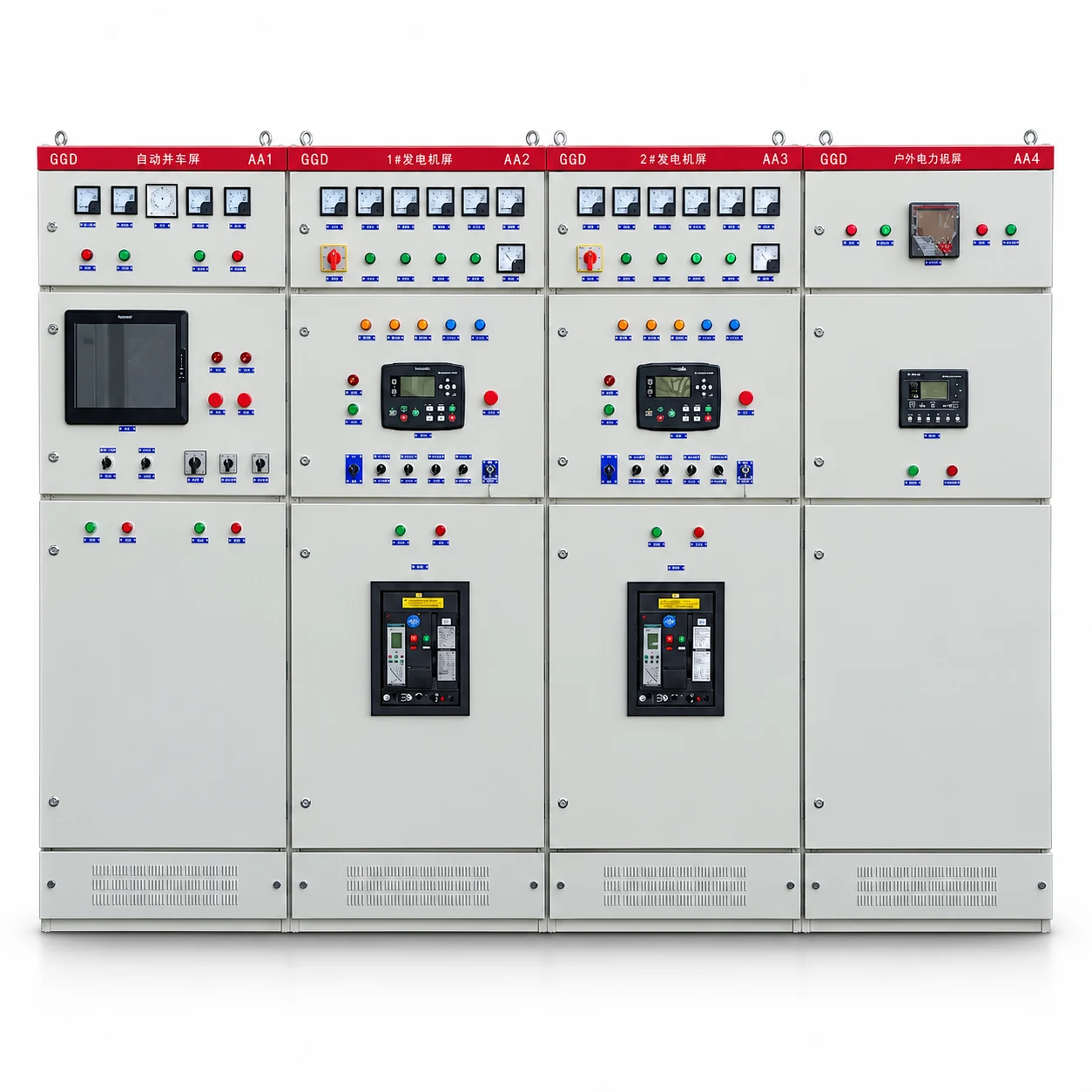
Header image: GGD fixed low-voltage switchgear, shown as a construction example.
Fixed vs withdrawable low-voltage switchgear differs in functional-unit construction: fixed units have fixed connections, while withdrawable units move between defined positions. The useful purchasing question is how that construction supports your circuit duties, maintenance plan and required availability. A model name alone does not define every connection, interlock or permitted operating condition.
For this comparison, GGD is the fixed distribution example and GCS-II is the withdrawable example. These are construction examples rather than interchangeable electrical specifications.
Fixed vs withdrawable low-voltage switchgear: key differences
| Buyer’s question | Fixed arrangement | Withdrawable arrangement |
|---|---|---|
| How is the unit connected? | The functional unit has fixed connections. Access and disconnection follow the selected design. | The unit is designed for withdrawal, with connection positions defined by its design. |
| What must be specified? | Device access, isolation arrangements, cable space and replacement method. | Unit sizes, service/test/disconnected positions where provided, interlocks and spare-unit compatibility. |
| What determines the outage? | Circuit arrangement, isolation boundary and the work being performed. | The same factors apply; withdrawal alone does not establish uninterrupted service. |
| What should buyers compare? | Complete circuit duties, verified ratings, access and lifecycle cost. | The same basis, plus drawer requirements, interchangeability and maintenance resources. |
Start with circuit duties, not the cabinet label
Separate incomers, bus couplers, distribution feeders and motor feeders in the load schedule. A main incomer and a small motor circuit do not necessarily need the same construction. Identify which loads can tolerate a planned outage and which need a separately designed alternate supply or other continuity provision.
Then compare the actual incoming devices, outgoing circuits, busbar ratings, protection functions and cable interfaces. The main busbar current is not the rating of every feeder. Likewise, a series catalogue’s maximum current and maximum short-circuit rating must not be combined into an assumed configuration.
Plan maintenance and access before choosing drawers
A withdrawable arrangement can support a defined unit-replacement strategy when the equipment, spare units and site procedures are designed for it. Confirm the positions and interlocks, control connections, handling space and which units are genuinely interchangeable. A drawer of similar dimensions is not automatically an approved spare.
Withdrawal does not itself prove that maintenance can take place with adjacent equipment energized. The isolation boundary, access restrictions and permitted operations must follow the equipment instructions and the project’s operating procedures. Do not turn a purchasing preference for drawers into an assumption of live replacement.
Compare space, separation and environmental limits independently
Ask for the proposed lineup dimensions, access clearances, cable entry and room ventilation requirements. Internal separation and enclosure protection describe different properties from withdrawability; one cannot be inferred from the other. State any required separation form and verify it against the offered assembly.
Check service conditions separately from electrical ratings. Ambient temperature, humidity and altitude describe the installation environment. Rated operating voltage, insulation voltage, busbar current and short-time withstand current describe different electrical characteristics. A temperature limit does not resolve a missing electrical rating.
Questions to include in the technical comparison
- Which circuits use fixed, disconnectable or withdrawable connections, and what does each offered unit support?
- Which unit positions, interlocks and control connections are included?
- What are the verified ratings of the offered busbars and individual circuits?
- What access, handling clearance, spare units and tools does the proposed maintenance plan require?
- Which drawings and verification records correspond to this configuration, and what is the agreed acceptance scope?
GGD or GCS-II: which page should you review?
Review GGD fixed low-voltage switchgear when the project calls for a fixed distribution arrangement. Review GCS-II withdrawable low-voltage switchgear when the circuit schedule calls for withdrawable functional units. Other low-voltage families should be assessed from their own documented construction and ratings; the family name is not a complete specification.
An industrial distribution application helps frame the load and continuity questions. It is not proof that either construction meets every industrial project specification.
Prepare the enquiry and acceptance requirements together
Send the single-line diagram, load schedule, system data, fault duty, room constraints and required circuit construction. Use the switchgear enquiry checklist to assemble the inputs and the factory acceptance checklist to define the documents and inspection scope. The project enquiry page is available when the scope is ready.
References and scope
The sources below explain general engineering terms and inspection practice. Product ratings on this website come from the corresponding model documentation; another manufacturer’s catalogue does not establish Kaiyue equipment ratings.